
RIRS Explained: The Modern, Minimally Invasive Solution for Kidney Stones
Introduction
Kidney stones are a common urological problem, affecting roughly 15–20% of the population in Turkey and worldwide. Traditional treatments such as percutaneous nephrolithotomy (PNL) or shock‑wave lithotripsy (ESWL) can be effective, but they often involve longer hospital stays, visible scarring, or limited success with larger stones. Enter Retrograde Intrarenal Surgery (RIRS)—a cutting‑edge, minimally invasive technique that allows doctors to break up and remove kidney stones without any external incisions. In this post, we’ll dive deep into what RIRS is, when it’s used, its benefits and drawbacks, and why it’s becoming the go‑to option for many patients with kidney stones.
What Is RIRS?
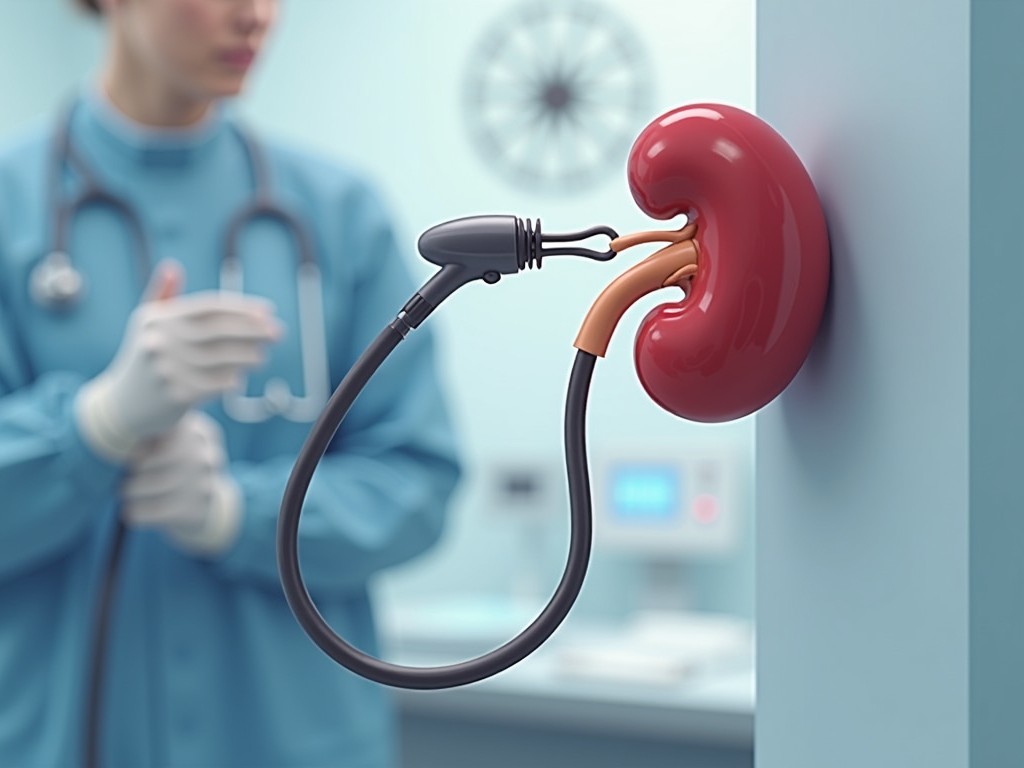
RIRS, short for Retrograde Intrarenal Surgery, is a procedure performed under general anesthesia that uses a flexible ureteroscope to access the kidney through the natural urinary tract. The scope is threaded up the ureter, through the bladder, and into the kidney, where a laser or ultrasonic device fragments the stone into tiny pieces. These fragments are then either extracted with a basket or allowed to pass naturally in the urine.
How Does the Procedure Work?
- Access: The surgeon inserts a flexible ureteroscope through the urethra, bladder, and ureter into the kidney.
- Fragmentation: A laser fiber or ultrasonic probe breaks the stone into small fragments.
- Extraction: A retrieval basket removes larger fragments, while smaller pieces are flushed out with irrigation.
- Post‑operative care: A temporary stent may be placed to keep the ureter open, and the patient is monitored for any complications.
When Is RIRS Indicated?
RIRS is versatile and can be used in a variety of clinical scenarios:
- Kidney stones up to 3.5 cm in size, including large stones that are difficult to treat with ESWL.
- Patients with multiple stones in one or both kidneys.
- Obesity or anatomical variations that make percutaneous access challenging.
- Patients who have failed or are unsuitable for ESWL.
- Cases involving simultaneous ureteral and renal stones.
- Patients on anticoagulants, as RIRS does not require blood‑thinning interruption.
Advantages of RIRS
RIRS offers several compelling benefits over traditional stone‑removal techniques:
- Minimal Invasiveness: No external incisions or percutaneous tracts—reduces scarring and postoperative pain.
- Short Hospital Stay: Average discharge time is about 24 hours, compared to 3 days for PNL.
- Higher Success with Larger Stones: Effective for stones up to 3.5 cm, whereas ESWL is limited to <2 cm.
- Lower Risk of Complications: Reduced bleeding, infection, and ureteral injury rates.
- Versatility: Works well in patients with kidney anomalies or those on anticoagulants.
- Complete Stone Removal: All fragments are extracted or flushed out, minimizing the chance of residual fragments causing future problems.
Potential Drawbacks
While RIRS is highly effective, it’s not without limitations:
- Longer Operative Time for Large Stones: Fragmenting big stones can take more time, potentially increasing the risk of ureteral edema or injury.
- Limited Availability: As a newer technique, only a few specialized centers and surgeons are fully trained in RIRS.
- Equipment Cost: Advanced flexible ureteroscopes and laser systems can be expensive.
Frequently Asked Questions
Is RIRS painful?
Patients are under general anesthesia during the procedure, so they do not feel pain. Post‑operative discomfort is usually mild and can be managed with standard pain medication.
How long does recovery take?
Most patients are discharged within 24 hours and can resume normal activities within a few days. Full recovery typically occurs within 1–2 weeks.
What are the risks?
Like any surgical procedure, RIRS carries risks such as infection, bleeding, ureteral injury, or stent-related discomfort. However, these complications are rare and usually manageable.
Can I have RIRS if I’m on blood thinners?
Yes. RIRS does not require stopping anticoagulant therapy, making it a safe option for patients who cannot discontinue these medications.
Conclusion
Retrograde Intrarenal Surgery represents a significant leap forward in kidney stone management. By combining the precision of modern laser technology with the safety of a minimally invasive approach, RIRS offers patients a quick, effective, and low‑risk solution—especially for larger stones that challenge traditional methods. If you’re experiencing kidney stone symptoms or have been advised to consider stone removal, consult a urology specialist to determine whether RIRS is the right choice for your unique situation.
Considering treatment in Türkiye?
Get a free consultation and cost estimate from verified specialists.