Laparoscopic Myomectomy: How a 15‑cm Uterine Fibroid Was Removed While Preserving the Uterus
Introduction
Imagine discovering a 15‑centimeter tumor inside your abdomen, causing pain, heavy bleeding, and a growing belly. For many women, the fear of losing their uterus and future fertility looms large. However, modern laparoscopic (closed) myomectomy offers a solution: a minimally invasive surgery that removes even large fibroids while keeping the uterus intact. In this post, we’ll walk through a real case, explain the procedure, and highlight why this technique is a game‑changer for women who wish to preserve their reproductive health.
What Are Uterine Fibroids (Myomas)?
Uterine fibroids, also known as myomas, are benign tumors that grow from the muscular wall of the uterus. They can vary in size from a pea to a large mass that fills the abdominal cavity. Common symptoms include:
- Heavy or prolonged menstrual bleeding
- Pelvic pain or pressure
- Frequent urination or constipation due to pressure on surrounding organs
- An enlarging abdomen or visible swelling
- Low blood count and dizziness if bleeding is severe
While many fibroids are asymptomatic, a 15‑cm fibroid can cause significant discomfort and complications, as seen in the case we’ll discuss.
The Case: 15‑cm Fibroid Removed Without Uterine Resection
A young, nulliparous woman noticed a gradual swelling in her abdomen. She experienced heavy bleeding, pelvic pain, and frequent urination. Imaging revealed a 15‑cm fibroid originating from her uterus and pressing on the bladder and intestines. The traditional approach would have involved a large abdominal incision and, in some cases, removal of the uterus. However, the patient’s desire to preserve fertility prompted a different strategy.
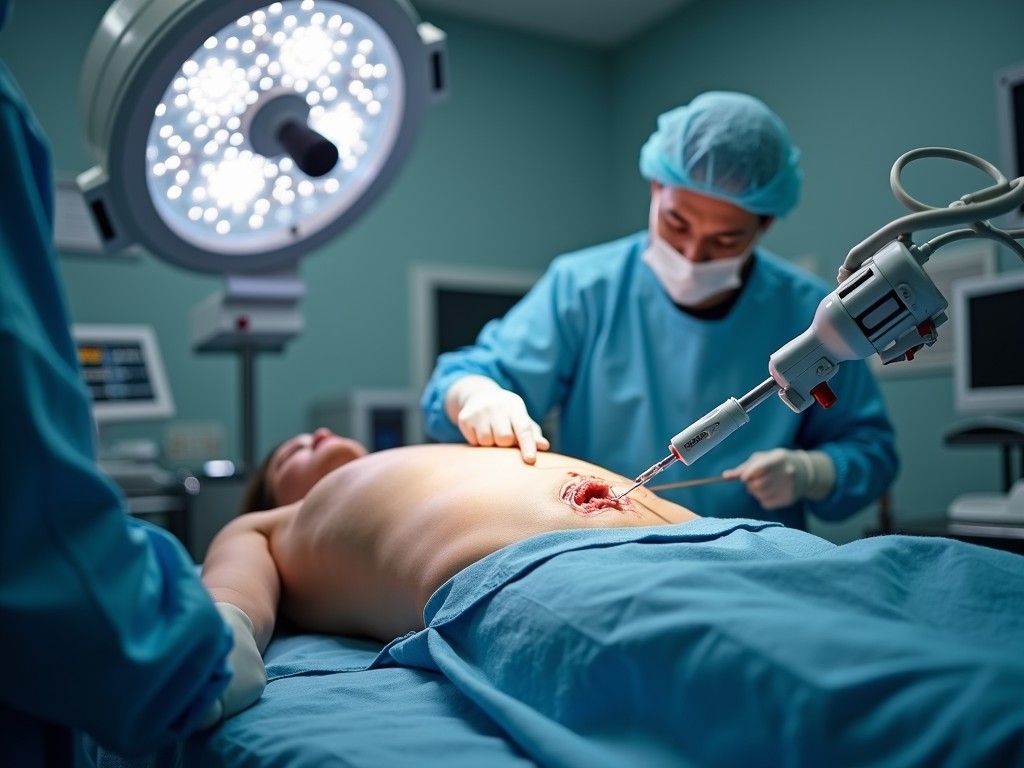
After a thorough evaluation, the surgical team decided on a laparoscopic (closed) myomectomy. The procedure involved:
- Making a single 1‑cm incision near the belly button
- Inserting a camera and specialized instruments through 0.5‑cm ports
- Carefully dissecting the fibroid from the uterine wall without damaging the uterus or ovaries
- Placing the fibroid in a protective bag and fragmenting it inside the abdomen with a morcellator
- Removing the fragments through the small incision
- Re‑suturing the uterine wall in multiple layers to ensure strength and healing
The patient recovered quickly, with minimal pain and no visible scar. She was discharged the next day and could return to work within a week.
Why Choose Laparoscopic Myomectomy?
1. No Large Incision, No Visible Scar
Traditional open surgery requires a large abdominal cut, leading to significant scarring and longer recovery. Laparoscopy uses tiny incisions, often leaving no visible marks.
2. Faster Recovery and Less Pain
Patients typically experience less postoperative pain, can eat and drink within hours, and return to normal activities within 4–6 hours. Hospital stays are usually one day.
3. Lower Risk of Complications
- Reduced infection risk
- No risk of hernias or abdominal wall weakness
- Minimal adhesions, preserving future fertility
4. Uterus Preservation
For women who wish to conceive later, preserving the uterus is paramount. Laparoscopic myomectomy allows removal of fibroids while keeping the uterine structure intact.
What Size Fibroids Can Be Treated Laparoscopically?
While many surgeons limit laparoscopic removal to fibroids under 10 cm, experienced teams can safely remove fibroids up to 15 cm, as demonstrated in the case above. Key factors include:
- Location of the fibroid on the uterus
- Number of fibroids (multiple can be removed in one session)
- Surgeon’s skill and experience with advanced laparoscopic techniques
Frequently Asked Questions
Q: Is laparoscopic myomectomy safe for future pregnancies?
A: Yes. When the uterine wall is sutured in multiple layers, the risk of uterine rupture during pregnancy is minimal. Many women have successful pregnancies after the procedure.
Q: Will I need to avoid certain activities after surgery?
Most patients can resume normal activities within a day. However, heavy lifting and strenuous exercise should be avoided for 4–6 weeks.
Q: How long does the surgery take?
Depending on fibroid size and number, the procedure typically lasts 1–3 hours.
Q: What if the fibroid is too large for laparoscopic removal?
In rare cases, a hybrid approach may be used: a small incision for extraction while the rest of the procedure remains laparoscopic.
Conclusion
Large uterine fibroids need not dictate a life‑changing surgery that removes the uterus. With skilled surgeons and modern laparoscopic equipment, even a 15‑cm fibroid can be removed safely, preserving fertility and minimizing recovery time. If you’re experiencing symptoms of fibroids and wish to keep your uterus, consult a specialized laparoscopic myomectomy surgeon for a second opinion. Your future health and dreams are worth it.