
Robotic Knee Replacement: Total vs. Partial – Which Is Right for Your Osteoarthritis?
Introduction
Living with knee osteoarthritis can feel like walking on a road full of potholes. When pain, swelling, and stiffness become daily obstacles, many patients wonder if surgery is the only way forward. Today’s orthopedic world offers two powerful options: robotic total knee replacement (TKR) and robotic partial knee replacement (PKR). Understanding the differences, benefits, and patient selection criteria can help you make an informed decision and step into a pain‑free future.
What Is Knee Osteoarthritis?
Knee osteoarthritis (OA) is the gradual wear‑and‑tear of the cartilage that cushions the joint’s bones. As cartilage thins and disappears, bone rubs against bone, causing inflammation, pain, and limited motion. Over time, OA can lead to deformities, muscle weakness, and a reduced quality of life.
Why Robotic Surgery Matters
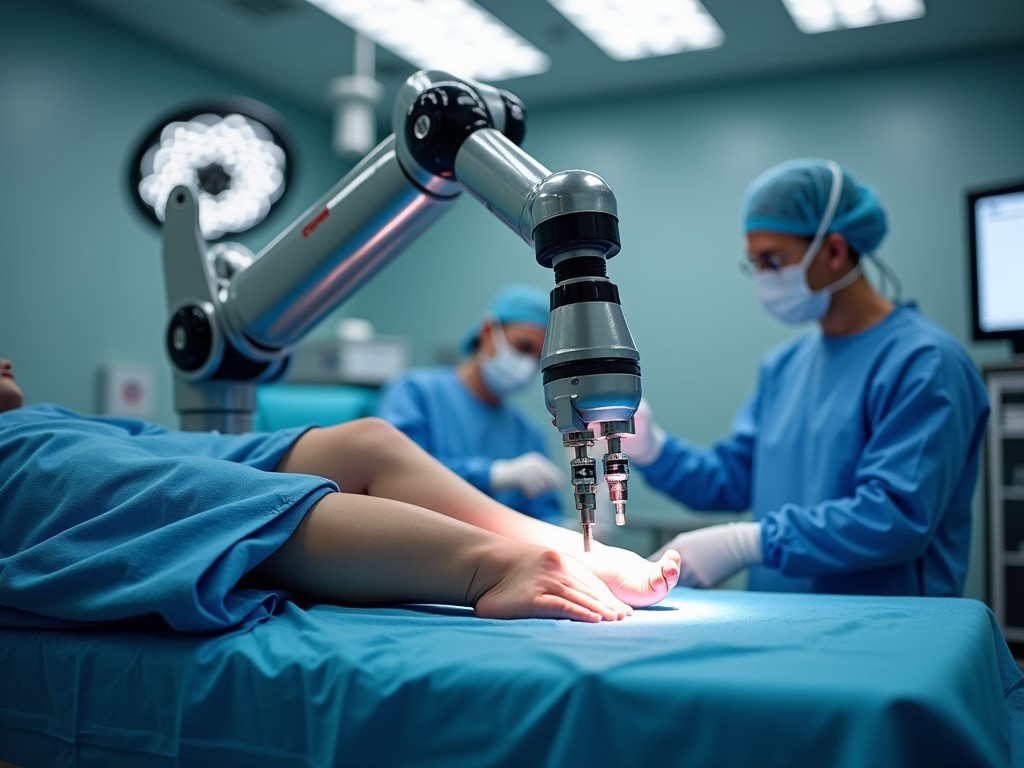
Robotic knee replacement isn’t performed by a machine; it’s guided by one. The process begins with a high‑resolution CT scan that creates a 3‑dimensional model of your knee. The surgeon uses this model to plan the exact placement, alignment, and size of the implant with a precision of less than 1 millimeter. During the operation, a robotic arm assists the surgeon in following that plan, reducing the risk of human error and improving implant longevity.
Key Advantages of Robotic Assistance
- Precision Alignment: Ensures the prosthesis sits perfectly along the mechanical axis of the leg.
- Balanced Ligament Tension: Digital measurement of soft‑tissue tension leads to a more natural knee feel.
- Reduced Bone Loss: Accurate cuts preserve healthy bone for future revisions.
- Shorter Recovery: Consistent surgical technique often translates to faster rehabilitation.
Robotic Total Knee Replacement (TKR)
TKR is the gold standard for patients with widespread, advanced OA affecting all compartments of the knee (medial, lateral, and patellofemoral). The procedure involves removing the damaged cartilage and bone surfaces and replacing them with a metal and polyethylene implant that mimics a natural joint.
When Is TKR Appropriate?
- Diffuse pain across the entire knee.
- Multiple compartments showing significant cartilage loss.
- Joint deformity or instability.
- Failure of conservative treatments such as medication, injections, or physical therapy.
Robotic TKR Benefits
- Optimal component positioning for maximum durability.
- Improved alignment reduces wear and extends implant life.
- Consistent soft‑tissue balance leads to a smoother, more natural gait.
Robotic Partial Knee Replacement (PKR)
PKR, also known as unicompartmental knee replacement, is reserved for patients whose OA is confined to a single compartment—most commonly the medial (inner) side. Instead of replacing the entire joint, the surgeon removes only the damaged cartilage and bone, leaving the healthy parts intact.
When Is PKR Suitable?
- Pain localized to one side of the knee.
- Isolated cartilage loss in the medial or lateral compartment.
- Preserved bone stock and intact ligaments.
- No significant patellofemoral arthritis.
Robotic PKR Advantages
- Highly precise bone cuts preserve healthy tissue.
- Maintains natural knee kinematics and ligament integrity.
- Smaller incision and less bone removal lead to quicker recovery.
- Potentially longer implant lifespan when performed on the right patient.
Choosing the Right Procedure for You
Deciding between robotic TKR and PKR involves a thorough evaluation by an experienced orthopedic surgeon. Key factors include:
- Extent and location of cartilage damage (imaging studies).
- Overall knee alignment and stability.
- Patient activity level and expectations.
- Age, bone quality, and comorbidities.
Frequently Asked Questions
1. Is a partial knee replacement less durable than a total knee replacement?
When performed on a properly selected patient, a robotic PKR can last as long as a TKR. Success hinges on accurate patient selection and meticulous surgical technique.
2. What is the recovery timeline for robotic knee replacement?
Both procedures typically allow patients to walk the day after surgery. Physical therapy begins immediately, and most patients return to normal activities within 4–6 weeks. PKR patients often experience a slightly faster recovery due to less tissue disruption.
3. Where can I receive robotic knee replacement in Ankara?
Our clinic in Ankara offers state‑of‑the‑art robotic knee surgery performed by a highly experienced surgical team. Contact us at 0312 502 70 74 or 0533 968 82 07 to schedule a consultation.
Conclusion
Advances in robotic technology have transformed knee osteoarthritis treatment, giving patients a choice between total and partial knee replacement tailored to their unique joint pathology. Whether you opt for a comprehensive TKR or a minimally invasive PKR, the goal remains the same: relieve pain, restore function, and extend the life of your implant. Don’t let knee pain dictate your life—consult an orthopedic specialist today and take the first step toward a smoother, pain‑free tomorrow.
Considering treatment in Türkiye?
Get a free consultation and cost estimate from verified specialists.